Friday, December 31, 2021

Cape Town for Christmas


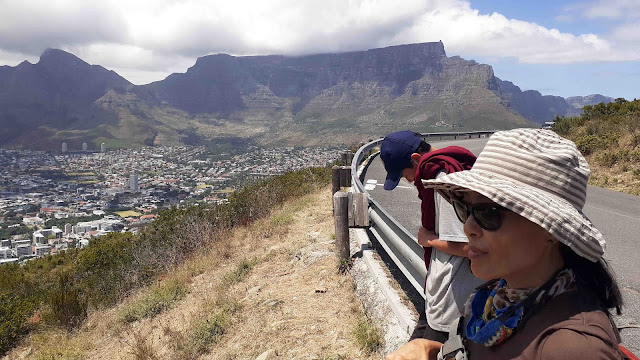
The top of Signal Hill with Table Mountain in the background

 'Cape Town for Christmas' has been our mantra--repeated amongst almost every cruiser headed this way--for so long that it was hard to believe that we were actually here (in time for Christmas, with a day to spare).
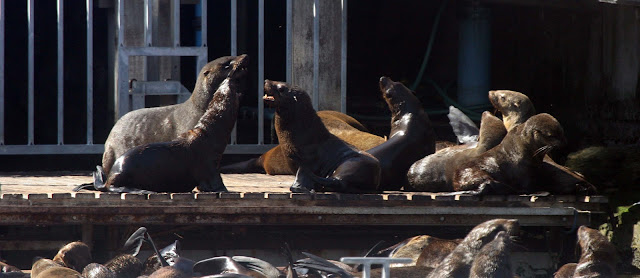
Getting excited about the one harbor seal in Knysna seems so quaint now.

Like many hard-won goals, the journey was just as significant as the end-result. Actually, there was hardly any evidence of Christmas at all here in Cape Town besides a smallish tree and the odd decoration. Even Muslim Malaysia was more 'Christmas-y', with loads of decorations and Christmas music.
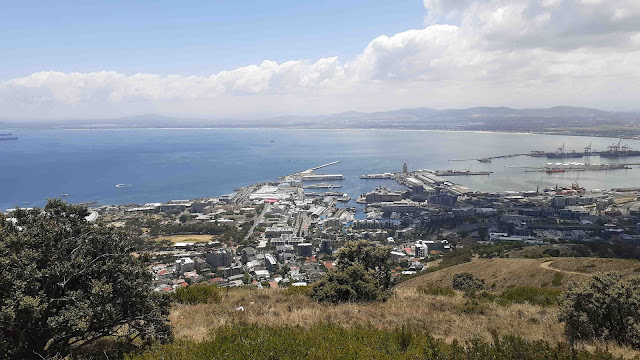
View from Signal Hill

There was holiday socializing aplenty: we had eggnog and watched How the Grinch Stole Christmas on Perry with Sonrisa's projector, enjoyed a happy-hour get together with all the other cruisers with oysters provided by Ohana and Dafne 2, and Sonrisa hosted an upscale Christmas morning dock breakfast. Unfortunately, on Christmas morning itself, Matt was laid out with a stomach bug but we had a pleasant, low-key day.
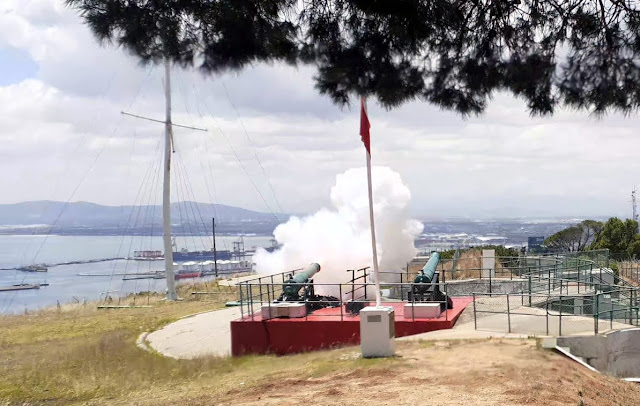
The cannon fires every day at noon.  Yes, it's loud.

The journey to Cape Town from Knysna marked the end of our stint in the Indian Ocean. We have officially ranked the Indian Ocean as the third favorite of the three Oceans we have sailed in due to its usual combination of large and confused seas (we might even rank it 4th, just on principle alone). Ironically, the worst part of our leg from Knysna to Cape Town was after we had crossed the invisible line into the Atlantic Ocean. With Cape Town almost in view and most of the passage complete, I was starting to feel pretty good about having 'completed' our journey past the southernmost point of the continent. The wind had filled in nicely and we were sailing along at a nice clip after having been so light that we had to motor for a good part of the prior evening.
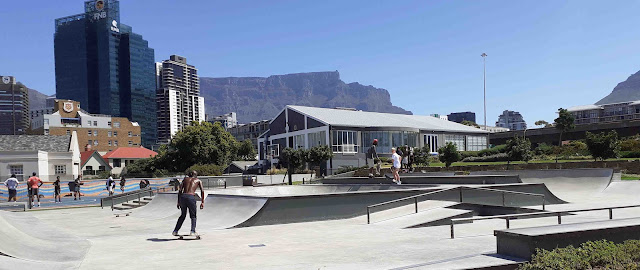
Skate park with Table Mountain as a backdrop

But as we passed Hout Bay, the winds started to pick up and kept getting progressively stronger. When Table Mountain came into view, we could see the 'tablecloth' (the sheath of clouds that sometimes blankets the mountain) being pushed down its side by katabatic winds. After breaking our mainsail batten recently too many times with strong and unpredictable winds, we decided to douse the already triple-reefed sails and motor in. 

For the next hour, Perry was tossed around by confused seas surpassing our trip from Curacao to Cartagena. There were sustained winds of 40 knots with at least one 57-knot gust. We broke dishes that have lived unscathed on Perry for nine years because of the weird way the waves jerked the boat around. Matt and Conrad were soaked by waves as they stood in the cockpit, which is unusual on Perry. This last battering by the local ocean was mostly just uncomfortable rather than dangerous but we were relieved as we entered the calm waters of the port just before sundown.
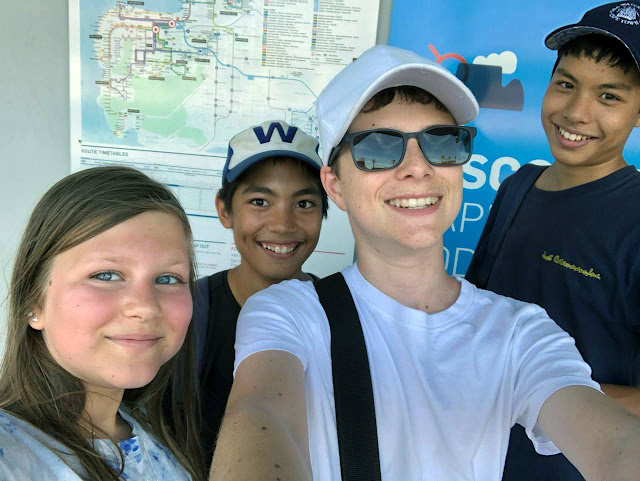
Mark and Conrad finally together again with these guys
 

As it turned out, we had bad timing, bad luck, or both. Boats that came into Cape Town earlier in the afternoon and the following morning had completely calm seas. On our approach, we were lucky enough to see a penguin and breaching humpbacks in the midst of dozens of seals and dolphins.

We have been enjoying the V&A Waterfront, which has the feel of Disneyland without the rides (though there is the giant, slow-moving Ferris wheel). Shopping isn't our thing, but it is a luxury to be within walking distance of a grocery store that has pretty much everything. We have also taken advantage of a few of the many restaurants, rationalizing that we went so long without eating out that we can afford to splurge a bit. This is the kind of thinking of course that will drain our bank account and give me ulcers. But the delicacies beckon.

We are ticking boat projects from our list and at some point will rent a car to play tourist. This is wine country (and our dollar goes a long way in South Africa). Wine tasting is almost a sport here and the vineyards resemble Napa Valley. We also want to go to the top of Table Mountain,   see penguins (the last ones we saw--besides the guy en route--were in the Galapagos), and a hundred other things. One thing we are not planning to do is swim in the 56-degree Fahrenheit water.*

*Matt and Conrad considered doing a Great White shark cage dive, but killer whales have mostly chased them away from the area.

Tuesday, December 14, 2021

Whether to weather the weather

Caracal (Kruger National Park)

Richards Bay was a joy to us after our passage from Tanzania. We reveled in the abundance of fresh produce, good wine, quality beef, and the friendly people. Zululand Yacht Club, besides being possibly the most affordable marina anywhere, went to great lengths to accommodate the influx of cruising yachts and even presented each International boat with a bottle of champagne. With all the cruisers around, there were plenty of opportunities to socialize (braai, anyone?). We even had enough Americans (and honorary Americans) and turkey for a Pilgrim-sized Thanksgiving dinner.

Elephants frolicking and bickering (Kruger National Park)

It was a good thing that Richards Bay was a pleasant place to be, as it became a bit of a bottleneck for cruisers headed to Cape Town. Everyone was waiting for a decent weather window which never seemed to materialize. The run from Richards Bay to Cape Town is one of the most challenging routes in the world because of the Agulhas current (a SW running current that can reach 6 knots), unpredictable weather patterns, and a lack of good anchorages to stop along the way. The combination of the current and gales from the wrong direction can be dangerous. 

Fortunately, with good weather forecasting available and lots of wisdom (such as the locally known and colorful Des Cason who volunteers to advise cruisers like us), you have plenty of information available to let you know when the going is good. But no amount of analysis is going to change bad weather to good, so we (and lots of our cruising friends) waited. And waited.

Our luck at spotting leopards continues
 

While we were waiting, we decided to take a short road trip to Kruger National Park and Blyde River Canyon. We saw a lot of animals during our economy car self-drive through Kruger.  Even though there weren't  anywhere near the numbers of animals compared to Tanzania, there were several that we hadn't seen before. A highlight was the dung beetles, which are hilarious in real life (especially 3 beetles fighting over one dung ball). We stayed at a campsite in the park with a resident warthog and hyenas howling at night. We also experienced a half-hour thunderstorm where we were pelted with near golf-ball sized hail that we were certain would dent up the rental car (luckily it didn't).

Thunderbird (ground horn-bill)


Saddle-billed stork


Why did the hyena cross the road? Maybe he didn't...

Love is in the air (the smaller one is the male)

Greater kudu
 

Blyde RiverCanyon was like a mini-Grand Canyon. We spent a day taking in its highlights and stretching our driving-atrophied limbs before heading back to Perry. As luck would have it, a weather window opened up for the day after we returned to Richards Bay. So we set about checking out of Richards Bay (which involved visiting four government offices and an impressive amount of paperwork, including a sketch of our boat and a diagram of the route we were going to take), getting diesel, shopping for groceries, and cooking a few passage meals.


Bourke's Luck 'potholes'


The Three Rondavels viewpoint


After buying some takeaway chicken dinners from the Zululand Yacht Club, we set off shortly after 5 p.m. for the 350-nautical mile journey to East London. To make it to East London before the next weather front, we had to leave right after the southerly winds had slowed, not allowing the kicked up seas time to subside. Our passage from Richards Bay to East London was fairly miserable. 

Atypically, both Matt and I got sick the first night (it may be a while before Matt will eat Peri Peri chicken again). Other than a brief period of downwind sailing, we had confused and large seas the whole passage. It was a relief to make it to East London. Unfortunately, we had to wait outside the harbor for an hour while tug boats navigated a big tanker out of the harbor. That made us two for two in having to wait for boat traffic before port control would clear us in (we had previously waited outside Richards Bay for two hours when we arrived to South Africa). Erie Spirit now refuses to follow us into a port because of our bad luck in this department.

East London is a small rural area and the Buffalo River Yacht Club was very welcoming and friendly. We got mixed messages from locals about whether or not it was safe to walk from the yacht club to the other side of the river. However, at least one restaurant told us they stopped delivering pizzas to the club because their drivers kept getting mugged. We lived in Chicago for years without ever being mugged, so while all the talk of mugging since we have gotten to South Africa is a bit unsettling, it's hard to gauge how worried we should actually be since half of the warnings seem to come from taxi drivers with a vested interest in keeping us from walking!

From East London, we headed to Knysna (pronounced 'nice-nah'), considered one of the most scenic places in South Africa. This passage was better. Considering the constant chilly drizzle and having to run the motor for half a day, you can see how low the bar is for a good passage these days. We had considered skipping Knysna because the narrow entrance can be tricky in the wrong conditions. Below is a satellite image of the entrance to the harbor on a typical day. Generally, you want to avoid the white foamy areas so you don't want to do it when it's all white foamy areas.


We took the advice of Mike at the Knysna Yacht Club and timed our journey to arrive about an hour before high tide to avoid breaking waves and adverse current. Sonrisa and then Erie Spirit led the way into the the forbidding fog. Our timing was right and we all made it through unscathed.

Fog at the headlands ('The Heads'). Seeing where you're going is overrated.


Over the hump

Kynsna is a beautiful coastal town that reminds us a bit of Cape Cod. It is popular with retirees because of the reasonable cost of living and bounty of natural beauty. Everyone walks and (almost) nobody gets mugged. Between the scenery, oysters and sushi, it will be hard to work up the motivation to leave.

The Heads from inside on a calm day


Mussels at the East Head Cafe

Andrew and Matt enjoying craft beer at the Knysna Distillery

Wednesday, November 17, 2021

Cashew--Gesundheit! Also, South Africa!


A cashew fruit and nut
 

Or in Swahili you say, 'maisha marefu' ('long life') when someone sneezes. Our last stop in Tanzania was Mtwara. We busied ourselves with our final fueling, provisioning, and other preparations to leave for South Africa (including the usual multi-step process of checking out of the country). While in line for the ATM, Matt met Maria, the co-owner of a cashew factory. She generously invited us to tour the factory.

Cashews from the farms, drying in the sun

We love both cashews and factory tours, so we jumped at the chance. We now have a much greater appreciation for cashews, which we already loved because they're delicious.

The ebullient Maria met us at Mama Cashew, which she had just opened a few weeks prior with George, her partner and husband. Maria is originally from Holland and George is from Tanzania. Together they have opened a factory that is projected to process 130,000 kilograms of cashews this year. In addition to turning out a great product, it provides much-needed employment to hundreds of Tanzanians in the area, mostly women. Many of the women are essentially* single-mothers that previously had no consistent way to support their children.

*Some were married and divorced (or not divorced, but not supported) by their husbands, who commonly take multiple wives.

One of the cashew processing stations

The amount of work that goes into getting a cashew from the tree to your mixed cocktail nut tin is mind-boggling. I had read that cashews were expensive because the delicate nut had to be extracted by hand. But seeing all the steps that go into the process and the speed of the nimble fingers that extract the nut was a revelation. 

Cashew cutting and shelling
 

I won't describe the whole process (though Maria spent a lot of time showing and detailing to us all the stations and steps) but there is a lot more involved than just cracking a nut. First of all, cashew shells contain urushiol, which is the same stuff that makes poison ivy so toxic. The workers coat their hands with oil for protection but have to remember not to touch other parts of their body. The shells are heated to make them easier to open. One set of workers cuts the shell (there are also machines that can do this part, but the machines are more prone to breaking the nut) and removes the cashew from the shell. The workers' speed and dexterity are truly impressive.

One of the boilers that powers the steam for the ovens


Down the line, another set of workers peels the skin from the cashews. This is also intricate work that doesn't even look easy. In between the various processes, the cashews are carried, dried, steamed, and heated. The ovens and steamers are powered by boilers that use the discarded shells. In the end, the cashews are sorted, packaged and exported.

Steamers to soften the cashew shells

Tanzania is the second largest supplier of cashews in Africa and 60% of the world's cashews come from Africa. Unfortunately, there aren't enough processing facilities like Mama Cashew in Tanzania, so a lot of cashews (and profits) go from the farms in Tanzania to processors in India and Vietnam. Even beyond the Fair Trade designation of Mama Cashew, Maria and George seem to be focused on good working conditions and improving the lives and livelihood of the workers. Her enthusiasm was contagious and we left the tour really rooting for its success. I will certainly never take cashews for granted again.


I hope the home-schooling thing is working because cashew processing is not in this kid's future. The factory would go out of business.

Once we wrapped up all the chores and preparations in Mtwara (Perry was actually anchored in nearby Mikindani), we left for Richards Bay, South Africa on a favorable weather forecast. A few kilometers outside of Tanzania waters, a big Tanzanian Navy RIB with a deck-mounted machine gun pulled up and started yelling for us to stop the boat so they could pull alongside. As we struggled to bring in the sails and slow the boat, the Navy boat bounced against us and threw their lines around our cleats. They didn't seem to understand that sailboats under sail can't just stop on a dime. The cranky yelling continued until they had gotten the documents they wanted (which took a few tries because of the windy and wavy conditions and a little vagueness--we want to see 'all your boat papers').

As it turned out, they just wanted to ask a few questions (like 'are we carrying contraband') and see our exit documents, but their aggressive tactics left a bad taste (and a couple of small gouges on the side of the boat).


An underway (in underwear) repair of our mainsail batten.

Our trip to Richards Bay was relatively fast and eventful. This seven-day passage was not the slow, flat downwind spinnaker-fueled run to Puerto Rico. We reached record speeds going downwind with the combination of current and wind (20+ knots surfing down a wave), despite having our sails reefed to the size of a handkerchief. Heavy winds make for challenging gybes, and during one of them, our mainsail top batten broke.  Matt replaced it, but the new one was a hollow batten instead of a solid one (which we were assured was just as strong). It too broke a couple of days later as the winds hit 40 knots and we were taking the sail down.

Luckily, we did not have to stop in Mozambique to wait out the weather as is common for this passage. We did have to motor a bit through some lulls to get into Richards Bay ahead of the next front, as well as to dodge some intense lightning storms as we closed on the coast of South Africa. There were also many more sail changes than usual. But we had favorable currents (4+ knots at one point) almost the entire way. The casualty list: mainsail batten (x2), engine room bilge pump, battery charger (we have two), laptop (we have a backup), leaky galley faucet. Also, the cutlass bearing on one of our engines started whining at us, letting us know that we should replace it soon.

We were very happy to see Richards Bay when we pulled up to the mouth of the harbor around 7 p.m. We had to wait a couple hours for shipping traffic before we were allowed to head in, so we had some dinner in the relatively calm waters outside the harbor and waited. With radio support from our cruising friends already in Richards Bay and tie-up help from Austin on Enchantress and Jenny and Natasha (the OSASA reps that have been helping to smooth the way for cruisers), we safely tucked onto the concrete quarantine dock around 11 p.m. After PCR tests and a day and a half of waiting for our clearance from the various officials, we were free to move about the country.

Richards Bay is a refreshing change for us after being away from civilization for so long. The grocery stores have just about everything (especially meat) at a cheap (for us) price and the people are friendly. We are docked at the Zululand Yacht Club, which is a lovely and welcoming place. We don't normally stay at marinas, but the price is very reasonable and the anchorage options are limited. Many of our cruising friends are here and the club has a braai several times a week.

We are ticking away our boat maintenance and repair list. The laptop is fixed and better than before, we have a new batten, the charger has been repaired (Matt replaced a couple of fuses that we didn't know existed), the galley faucet is fixed, and the bilge pump has been replaced. Having water at the dock also means that Perry has gotten the first proper wash down in almost a year.  Meanwhile we are also watching the forecasts closely to find a good weather window to make our way to Cape Town, where we hope to spend the holidays.

Monday, November 1, 2021

The Many Faces of Tanzania

Tanga anchorage

We met a Tanzanian woman named Happy (isn't that a great name?). She visited Europe for the first time a couple years ago and although she enjoyed it, she explained why she wouldn't want to live there. In Tanzania, even though people don't have much, they will help as much as they can you if you are in need. Contrast this with Europe, where people expect themselves and others to be self-sufficient. If someone needs help, the government might help, but the culture is not one of widely sharing.

Mohammed of Koma - fisherman, teacher, community activist

Those weren't Happy's exact words, but it's the gist of what she was saying. I wonder if that sentiment--that Tanzanians believe that more fortunate people should share what they have--is the basis for one of the more annoying aspects of visiting Tanzania for Western-minded foreigners. Does Tanzanian culture spawn the idea that foreigners (who in the minds of many Tanzanians are all rich; relatively speaking, they are not totally wrong when it comes to most visitors) should share what they have with less fortunate Tanzanians?

A house on Kilwa Kilindoni. Guard goats.
 

Particularly in areas visited by a lot of tourists, like Zanzibar and Arusha (the starting point for most safaris and near Mt. Kilimanjaro), the touts and beggars can be overwhelming. There are more ways for people to make money off tourists than you can shake a stick at--from selling tours and knickknacks to steering people to a specific store, bus or restaurant. Saying 'no, thank you' seems to be akin to an invitation for the hard press. And when it becomes clear that you mean 'no', it can transition to just plain begging for a 'gift' or 'help'. Like many countries that rely heavily on tourism, Tanzania's tourist industry (despite its lack of restrictions during Covid) has suffered mightily and the desperation in some people is palpable.

Kids having a laugh on Koma Island

Even in the less tourist-ridden spots, if the price isn't marked, foreigners can expect to be charged much more than locals for produce at the local market, clothes or for a taxi ride. Although this isn't uncommon throughout the world, the magnitude of the overcharging can be much bigger. Some of these guys are really shooting for the stars. Whereas in Southeast Asia, you might be asked for two or three times the local amount, in Tanzania it is common for the starting salvo to be ten times the local amount. On the other hand, in Mtwara, which seems to have very few foreign visitors, there don't seem to be Mzungu (literally 'white') mark-ups. A police officer in Mtwara that Matt was chatting with did ask whether we were rich though.

Mosque ruins in Kilwa Kisiwani
 

My attitude towards these tiny 'injustices' has evolved during our time here. Mainly, this is because the strength of the dollar makes everything really cheap, especially compared to the crazily expensive Seychelles. Negotiating beyond a certain point often means quibbling over pennies. I used to feel that the fleecing of foreigners translated to a lack of respect for us suckers (and I still feel like some places and people do get a measure of joy from it), but really most people are just trying to make as much many as they can and it's not all about me.

More mosque

It took us a couple of weeks of day-hops to move from Tanga to Mikindani/Mtwara. After returning to Stone Town and spending a couple of days in Dar es Salaam, we visited a small island called Koma. We had heard about it from other cruisers and friends. The highlight of the visit was Mohammed, a fisherman who has started the equivalent of a Head Start program for pre-school aged children. Although he has no formal training, he has taken it upon himself to teach the young children of Koma until they start Primary School (there is a government school on the island) at the age of seven or so. We were able to donate our globe and some books and spent some time with the many children and seeing the villages.

Inside the Gereza/Fortress ruins at Kilwa Kisiwani with Jemila, our guide

We also made a stop to see the Ruins of Kilwa Kisiwani, which is a UNESCO World Heritage site. We hired our required guide, who purchased our permits, and took a boat to the ruins, some of which date back to the 13th century. We saw a lot of incredible historical places and ruins in India and Cambodia, but it was still an interesting visit.

Teaching the kids the card game Uno


Frisbee anyone?

As I write this, we are in Mikindani doing our final fuel and food provisioning and boat projects and taking care of formalities in Mtwara. As soon as the weather forecast is favorable, we will start making our way to Richard's Bay, South Africa.
By the time this post is published, we should be on our way to Richard's Bay. The journey can take a little over a week or as long as a few weeks, depending on the weather and whether or not you have to stop along the coast to wait for weather. I just said some form of 'weather' three times in a row, so it's time to go.

Mohammed with some items bought with money donated by Steel Sapphire